Sunday, 29 December 2013

New Years' Resolutions

Firstly: if I knew how to transfer this blog somewhere else I would! It's a pain to log into now.

Secondly: it has been a very long time, it seems. Not because I haven't been reading, but because I haven't been writing.

It's been an unusual year. This time last year I was in the middle of my NQT year (probationary year of teaching) and struggling to maintain a healthy work-life balance. Now I am a supply teacher, mainly working long term in one school, living on the other side of Sheffield, and completing my Masters in Education as well as taking an AS-level German class on the side. Lots of things happened to get me to this place, and it has been nothing if not a challenge. Who knows where I will be in December 2014.

As I look forward to the future I find myself wanting to make some resolutions, which I very rarely do.

1: exercise once a week
2: be thankful for people more (I plan to randomly show my appreciation via social network as well as in person!)
3: write something about all the books I read.

For Christmas from my housemates I received this:

It's a Moleskine reading journal ('Organise your passion!'). After it made me smile, I thought it might help me in my resolution, so a good gift (thanks, J and D).

I'm hoping this will help me to blog about books I am reading more, and to be slightly more insightful too.

Since I regularly have a variety of books on the go at once (lack of attention span/love of variety) the following should be making an appearance at some point:

Evening in the Palace of Reason, James Gaines - non-fiction about the Baroque/Enlightenment battle shown in J.S. Bach's composition of a 6-part fugue from a seemingly impossible melody given him by Frederick the Great of Prussia. Seems interesting from the start...

The Hobbit, J.R.R. Tolkien - I have read this, but after seeing and being not greatly impressed by the second movie felt it needed a re-read for me to be able to appreciate what Tolkien originally wrote.

Shadows on the Rock, Willa Cather - started reading this ages ago and for some reason put it down for a while. Centres on a father and daughter in 17th century Quebec and is beautiful.

The Handmaiden's Tale, Margaret Atwood - I've heard so much about this but never read it, and as I was given it as a Christmas present there's no excuse now!

The Devil's Novice, Ellis Peters - the eighth instalment of the 'Brother Cadfael Chronicles', which I discovered a few months ago and have been greatly enjoying. I like to read the novel then (with the aid of a certain video website) watch the 90s TV episode featuring the wonderful Derek Jacobi. My favourites so far have probably been A Morbid Taste for Bones (book 1), The Leper of St Giles (book 5) and The Sanctuary Sparrow (book 7). I'm sure I will blog on it at some point.

Gormenghast Trilogy, Mervyn Peake - I read Titus Groan several years ago, and was excited to pick up a beautiful copy of the trilogy in a charity shop in September. Sadly I got stuck somewhere around Titus' christening and really need to finish this!


As tempted as I am to continue and give my thoughts on Death Comes to Pemberley and various other things I have read/seen, let's call it a day for now...

Monday, 19 August 2013

The proof of the book is in the re-reading

In my family, I am considered something of an oddity in that I can – and will – read and re-read my favourite books. It’s something my Grandma never understood about my Granddad – “You know the ending! It’s just not as interesting the second time!” – but I believe that the proof of an excellent book is in the re-reading. If it is truly well-written with a gripping plot and believable characters, re-reading will bring to light new facets of each of these things. Otherwise, I will get bored and stop re-reading.

Some books I have re-read just once (occasionally this has been due to studying them at university!), and others I re-read on a two year to yearly basis. Some of them, I have been reading since childhood, and others are more recent. Here is a selection of books I have lost count of the amount of times I have read, and why. Give them a try J

The Chronicles of Narnia (C.S. Lewis) – childhood classics. My favourite used to be The Voyage of the Dawn Treader and I remember disliking The Horse and His Boy, but this is now actually one of my favourites. A few years ago I decided to read the series based on chronological publication date rather than the order they are usually presented in (beginning with The Magician’s Nephew – which was actually last but one to be published), and I think I prefer it this way. The current order was suggested by a young fan in a letter to Lewis and was adopted after he agreed it would make sense. Every time I read these books I discover something new!

Little Women (Louisa May Alcott) – my Mum used to joke I could go on Mastermind answering questions about this book. I read it, and its three sequels, many many times as a child. Like every young girl reading this book, I wanted to be Jo March. I’m sure it comes across as very moralistic to anyone reading it for the first time as an adult, but I love it. It’s just the story of four sisters learning their place in the world and how to love each other and those around them really well – and it has some funny moments, too. BBC Radio 4 recently re-ran their dramatic version and I really enjoyed it. The 1994 film is also beautiful.

Wuthering Heights (Emily Brontë) – read for the first time aged 11, this was the first book I really had to work at understanding. I knew part of the story from the musical Heathcliff (it was a musical starring Cliff Richard in the title role; my mum was a huge fan so we watched the video many times!) but realised that half of the story in that was missing. I wrote my A level comparative paper on it (comparing the treatment of romance in a social context to that in Elizabeth Gaskell’s North and South) and learned pages of quotes from it for a final year exam on Victorian Literature during my degree. It’s a fascinating book, and each time I read it I realise that more and more; it’s just so unusual for its time (and for any time), and the characters are so individual – I can’t think of equivalents to Cathy Earnshaw and Heathcliff in any other books I know. I still cannot understand, however, how ANYONE having actually read the book, could find Heathcliff attractive.

I Capture the Castle (Dodie Smith) – as I write, I am watching the film adaptation of this. Although some details of the novel are amended, I think the spirit of the book is quite well communicated – and I love Bill Nighy as Mortmain (though physically he doesn’t correlate to the description in the book). This is the classic coming of age novel, and what I love is Cassandra’s narrative, the beautiful characterisation of the eccentric family, and the literary references. I also find it funnier and funnier each time I read it, and every time I don’t want it to end because it is so delightfully written. Having read some of Smith’s other novels in the past year, this is still the best in terms of storyline, characterisation and pace. It’s also incredibly bittersweet, and has probably my favourite opening line of all time (‘I write this sitting in the kitchen sink’).

These is My Words (Nancy Turner) – at the last meeting of school’s book club, we discussed this as I had recommended it before. All of the ladies who read it absolutely loved it, and every person I have lent it to has also loved it. I still maintain it would be a fantastic film, particularly with Hugh Jackman playing Jack, the main male character! Another diary form novel, it draws you into Sarah’s world, a young woman from a pioneering family finding her way in the world. She and Jack are wonderful characters, and this book succeeds in making me both laugh and cry every single time I read it. Again, bittersweet, but so satisfying. There are sequels. One day perhaps I’ll read them...

The Lost Art of Keeping Secrets (Eva Rice) – This is a funny one. It’s just a retro chick-lit type novel but it’s so light, fluffy, innocent and fun that I read it for pure escapism. It contains: a mouldering stately home, a poverty-stricken noble family who live in it, three teenagers living up in the late 50s, an eccentric older lady, and lots of improbable happens. It’s delightful.


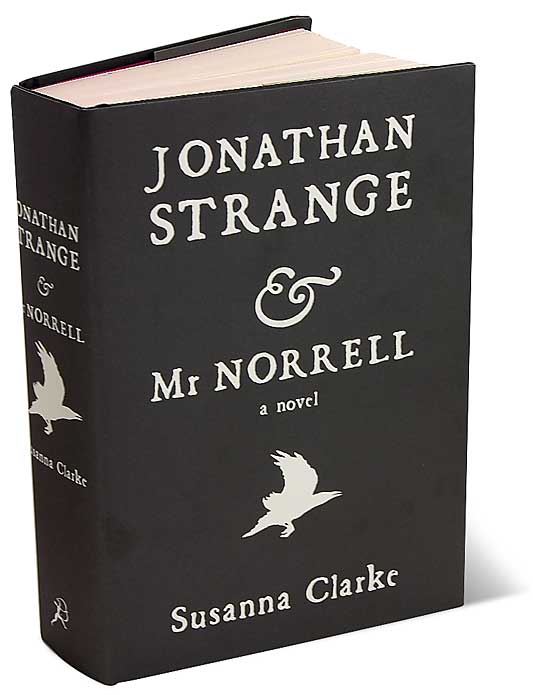
Jonathan Strange and Mr Norrell (Susanna Clarke) – a wonderful combination of the politics, literature and society of the early 19th century, Austenesque writing, and magic. It’s really long, but utterly enthralling. The at times very long footnotes add richness and humour to the story, and the novel is set in a rich imaginative world which is incredibly convincing. The first time I ‘read’ it was age 17 as an audio book – very long but very worth it as the skill of the writing becomes so evident when read slowly. The Ladies of Grace Adieu, the book of short stories, is also lovely, and I hope Clarke writes more soon!

Saturday, 2 March 2013

Unrelenting perseverance and the glory of battle


I have been rewatching The Lord of the Rings movies this week, bit by bit, during marking and planning and in the evenings. The films are all now 10 years old at least, which is incredible as I remember very clearly the excitement of waiting for them to open at the cinema in three succeeding Decembers as a teenager.

I have always found the scenes with Frodo and Sam, in The Two Towers and The Return of the King, to be much more boring than the great battle scenes in Rohan and Gondor, with their repetitive scenery and conversations. Yes, Frodo has a tough time. Yes, Gollum is a bit suspect. Get back to the exciting bits already! I love the build-up to and the bravery of Helm’s Deep and Pelennor Fields. I remember feeling this way when reading the books, too, where it is much less broken up, and where Frodo, Sam and Gollum trudge their weary way for many, many pages of unremitting gloom before the focus moves back chronologically to see the story through the eyes of the rest of the Fellowship. My brother is reading the books now, too, and is currently stuck in the slog that is the end of The Two Towers, where these three seem to do little but walk, and I’ve told him to stick at it for the ‘good stuff’.

But it struck me just now, when the cameras move from Faramir’s return to Minas Tirith and Gandalf and Pippin’s relief at hearing he has recently seen Frodo, and focus back on the steep and weary climb into Mordor, that this is the point. The point is the unremitting gloom, or – as I suggest we see it – the unrelenting perseverance.


While we are excited watching the great battles and rejoice with the victory and sacrifice of individuals (who doesn’t want to stand up and cheer when, in The Two Towers, Theoden, Aragorn, Legolas and their men decide to ride out for one final push ‘for glory’ and are met with the blinding sight of Gandalf and the Rohirrim coming to save the day?), the main point of the story is Frodo and the Ring, and the task he has to accomplish. Gandal and the rest of the remaining Fellowship are aware of this, often gazing into the distance to try to ‘sense’ whether Frodo is still alive and if he is succeeding in his task. They gain much more of the immediate glory, but the reality is if Frodo does not play his unglamorous part, it’s all for nothing. For the enemy to be defeated, he has to keep on keeping on, down the difficult, dangerous road he treads – dealing with fatigue, squabbling travelling companions struggling with their own issues, hunger, despair, and the growing sense he has of being drawn into the enemy’s mind through the burden of carrying the Ring. This is the true courage that allows good to conquer evil – the epic handful of battles, while exhausting, are less meaningful in the long run than the constant epic of just keeping going when the easiest thing would be to lie down and give in.


Everyone wants to win a glorious battle. That’s what movies and storytelling and narrative are built around – something in us loves for events to build and build until they reach a climax of confrontation and eventual victory for good. I’ve often thought after watching films ‘based on a true story’ whether the tipping point really came where it does in the film, or whether this is heightened for Hollywood. Because in real life, aren’t we really a little more like Frodo and Sam than Gandalf and Aragorn? Most of us in difficult situations just plod along, dealing with our circumstances, our daily difficulties and the trials we face, large or small. Many of the people I am privileged to know who are in such seasons of life do not defeat them through a sudden great burst of courage, valour and skill but by picking up their courage every morning and facing a new day of trudging like Sam and Frodo.
As much as I’d like to see my life as a battle where one day I will just ‘get it’ and have a Dead Poets Society/Freedom Writers moment and ‘break through’ to that tricky class or that child I have personality differences with, I have been learning this year that I can only really take one step at a time. Sometimes we go forwards, sometimes we stumble back a little, and occasionally – yes – there will be a glorious battle. But I am seeing that in every day picking up and starting again, I am gradually gaining ground. It is not glamorous, but it is courageous.

If you are like me, and would much rather be in a few good ‘battles’ than suffer the seeming boredom of the constant difficulty of life, let this encourage you. What you are doing, the road you are taking, the ‘Ring’ you are bearing, is important. It is vital to the Fellowship. It is worth it. It will cost, just as it cost Frodo. But in the end, when you stand before the King, as Frodo and Sam do, you and the whole Fellowship will be able to fully appreciate the impact of your courageous, unrelenting perseverance.


'Then he said to them all: "Whoever wants to be my disciple must deny themselves and take up their cross daily and follow me. For whoever wants to save their life will lose it, but whoever loses their life for me will save it. What good is it for someone to gain the whole world, and yet lose or forfeit their very self?" '


*Disclaimer: I am, of course, using ‘battle’ in a loose, metaphorical sense. I am in no way suggesting that anyone should have recourse to violence or even to causing confrontation for confrontation’s sake – what I am thinking of in my own mind comes more from Ephesians 6:12:

'For our struggle is not against flesh and blood, but against the rulers, against the authorities, against the powers of this dark world and against the spiritual forces of evil in the heavenly realms.'


I also see a great deal to value and which can encourage us within the battle scenes of The Lord of the Rings, and I'm sure one day I will blog about those too. But my point is - they're just a means to an end. The main reason they started out in the first place was to support the goal of getting rid of the Ring with Frodo.

Monday, 18 February 2013

Back to reality...


 The greater majority of my reading for pleasure involves fiction. I love to read newspapers, although as I rarely have the time, when I do I just get the ‘i’; I was also a subscriber during my NQT year to the TES (Times Education Supplement) but again, there just isn’t enough time... I also read a variety of blogs, and books about spiritual matters. Other non-fiction reading generally falls into four categories for me: societies/travel, literary, biography and cook-books. Sometimes those categories overlap. Here are one or two I’ve been reading recently...

The Secret Life of France, by Lucy Wadham
Bought for me by my old housemate for Christmas when we were both on our years abroad, this is a reflection on French society as expressed by a Brit who moved there in the middle of her university studies after marrying her Parisian boyfriend. Some parts are insightful and interesting, but on the whole I find it far too Paris-centric and struggled to recognise the French people I have lived and worked with in my two times living there in her description of the adulterous, pleasure-seeking Parisian bourgeoisie she knew in the 80s. There is also a massive amount later on about international politics which is only loosely related to the overall aim of describing French society, and which appears to be more about showing off about some of the high-up acquaintances Wadham made during her journalistic career. There are some sweeping generalisations, as with any book which sets out to describe a society, but the comments about French TV definitely made me smile!

The Brontës, by Juliet Barker
Believe it or not, I have had this book out of my local library since I moved to this flat last summer. By dint of returning the book every time I reached my renewal limit, and then immediately reissuing it to myself (tricks of the trade learned during my part time library job as a teenager!) this has been done with incurring only minimal fines when I couldn’t get myself organised enough to renew it on time. It’s a whopper of a biography, spanning 1000 pages (plus another 200 of notes), and a 90 year period beginning with the birth of Patrick Brontë. Despite the time it took for me to read it, it was genuinely fascinating stuff (particularly once you get past the very long quotes from the juvenilia!) and, despite not being so interested in the passages about local Haworth politics, I was mesmerised. Barker evidently feels a responsibility to set the record straight, particularly about Patrick Brontë, Arthur Bell Nichol and Anne and Branwell Brontë, arguing that their reputations were created by Charlotte’s embittered friend Ellen through Elizabeth Gaskell’s posthumous biography of Charlotte. She uses lots of really interesting extracts from letters, and even when she ventures into the realms of speculation is able to back up her ideas with other evidence which gives a good idea of the psychology of the subjects. Charlotte particularly comes across as very human, with her strengths and weaknesses shown very clearly!
 
Mrs Robinson’s Disgrace: The Private Diary of a Victorian Lady, by Kate Summerscale
I don’t think I would have chosen this book to read by myself, despite having read and been intrigued by The Suspicions of Mr Whicher, but it was one of two books we were going to discuss at my school’s book club, so I bought it (another lady bought the other), read it and we swapped. Like Mr Whicher, it’s got a very factual feel about it, which the other ladies at the book club didn’t like as I think they’d prefer to read a love story! Unfortunately the subject matter didn’t interest me much – the book centres around one of the first divorce cases in England after it became possible to divorce through the law courts, where the main piece of evidence was the woman’s diary. In this diary, Mrs Robinson (the lady in question) had written about an affair she claimed to have had with a married doctor, over a period of years. Summerscale’s interest appears to chiefly lie in the way in which Mrs Robinson seems to have used her writing as a tool – to create happiness for herself in an uncongenial marriage – and in the arguments put forward by the defence that Mrs R was ill and had imagined the events of the affair. Although I didn’t dismiss it quite as quickly as the ladies in the book club (!), the most I could say of this was that it was “OK”.

A Soup for Every Day: 365 of our Favourite Recipes, by the Covent Garden Soup Company
I love soup. Yum. So I bought this with a Waterstone’s voucher, and it is lovely. It looks delightful, and many of the recipes look really inspiring, tasty, and some downright unusual (chocolate and rhubarb ‘soup’? Hmm). I’ve only tried making one so far but have loved flicking through it to decide what to try next! As the soups are laid out one for each day of the year, care has been taken to choose ingredients which are seasonal, topical and would be at their best that time of year. During the ‘big snow’ in January I made the spicy sweet potato soup, which was lovely – most of the spiciness came from the rather large amount of ginger it contained! – but my only gripes were that it was really, really, really thick, and that the recipe said it would serve 4 (it served my American housemates and me, so – 3). I definitely followed it right!

Coming up in non-fiction I have...
Storyteller: The Life of Roald Dahl, by Donald Sturrock. Another doorstop book! I love Roald Dahl’s children’s books of course, but also his short stories for adults – although I do find many of them very creepy (‘Royal Jelly’ – yuck...)
North Africa, by Barnaby Rogerson. I have a longstanding interest in North Africa so am looking forward to finding out more about it – am hoping the writing style will be engaging and not too battle-based!!

Of course, this is while trying to read Ian McEwan’s Solar, re-read Les Misérables and keep up the light relief with a Dorothy L Sayers (Five Red Herrings) I’ve been trying to finish for ages!! Oh, and that little matter of a more than full-time job...

Saturday, 12 January 2013

Les Misérables: Justice and Mercy


Les Misérables has long been one of my favourite musicals. When I was a child, the dance class I was in used some of the songs as part of a sequence at a show, so I feel like I have known some of the songs forever. I think it was when I was 14 that my mum took me to London to see the show and I loved it. Since that first time seeing it at the West End, I’ve seen it once more there with my brother (who I went to the cinema with last night), and once in an amateur school production with my friend Lucy as Éponine – a very talented cast. I have also actually read the 1300 page book. I was 13 at the time, and skipped over the 50 page description of the Battle of Waterloo and Thénardier’s involvement in it, but recently began to re-read it, and have been much more engrossed this time around. I will always remember the pastor of the church I was in growing up telling me that when he first saw it, it made him want to preach a sermon at the end. After seeing the film last night, I feel the same way.

The music of the film is wonderful – stirring and haunting (and the whole film is sung – for those of you who don’t know!!), and the acting and singing was fabulous. I especially loved the performances by Anne Hathaway, Hugh Jackman and Eddie Redmayne (he made me like Marius, which I had never done before!!) – and the production was terrific. Bringing the musical to film made it much more intimate, and much more detailed (great examples, I think, are Jean Valjean’s ‘Soliloquy’, the detail in ‘Master of the House’ and of course Valjean dragging Marius through the sewers!).

But really what gripped me once more, and moved me to tears on several occasions, is the story. I love the story of Les Mis, and I love the character of Jean Valjean – he is possibly my favourite character from anything I have ever read. It’s a story of freedom, love, mercy – and redemption. The story is explicit in its belief in the power of grace to transform people, and as a Christian this is something I firmly believe in – and it is beautifully displayed in the character of Valjean. Victor Hugo’s own position towards the Catholic church was constantly in flux, but he did seem to have few issues with the central positions of the faith.

Hugo spends at least 50 pages in the opening of his novel describing the Bishop who so dramatically alters Valjean’s life, carefully showing us a picture of his selfless, merciful and loving life, which I think can be summed up in this beautiful statement: ‘As we see, he had a strange and peculiar way of judging things. I suspect that he acquired it from the Gospel.’ Previously, Valjean has been subject to a strict and pure Justice, which punishes him with imprisonment for the desperate theft of bread, and then for attempted escape. In showing Mercy to Valjean when the law was ready to execute Justice on him, as it had so many times before, the Bishop enacts a process of redemption:

‘ “Jean Valjean, my brother: you belong no longer to evil, but to good. It is your soul that I am buying for you. I withdraw it from dark thoughts and from the spirit of perdition, and I give it to God!” ’

In the novel, Valjean exhibits a final act of selfishness in stealing a small sum of money from a boy he meets on his travels, and this last minor incident culminates in a life-changing realisation what the bishop has done for him:

‘He beheld himself then, so to speak, face to face, and at the same time ... he saw ... a sort of light which he took at first to be a torch ... he recognise that it had a human form, and that this torch was the bishop.
‘His conscience weighed in turn these two men thus placed before it, the bishop and Jean Valjean... as his reverie continued, the bishop grew grander and more resplendent in his eyes; Jean Valjean shrank and faded away. At one moment he was but a shadow. Suddenly he disappeared. The bishop alone remained.
‘He filled the whole soul of this wretched man with a magnificent radiance.’

The bishop has literally bought this desperate man. After having set the bishop up as a Christ figure, I think part of what Valjean is meant to represent in the story is a similar thing. The bishop has shown Valjean divine love – and this spark is fanned into a flame in him too. Throughout the rest of the novel, Valjean makes mistakes and errors of judgement (he is still human!), but instead of being compelled by hate and fear he is now compelled by mercy and love. Even his desperation to conceal himself in Paris is mainly for Cosette’s sake, as he remembers the promise he made Fantine to care for her. We constantly see him seeking to do the loving thing, even when it is not necessarily the right thing... and this extends to Javert.

Valjean, the man redeemed through Mercy, against Javert, the man ruled by Justice.


Christians often talk about the Mercy and Justice of God, and how these are seemingly opposing forces. God is just – therefore according to His laws He must punish sin. Yet He is merciful – and provides a Redeemer to allow us to know His love. Jean Valjean is like many people – he is familiar with the Justice of God, but until meeting the bishop, not His Mercy. Javert has never encountered Mercy, and he is so entrenched in his law-keeping belief that he can please God and man through Justice, that when Mercy is extended to him, he is unable to comprehend or accept it. It seems so unbearably UNjust to him to have Mercy shown to him, that he takes Justice into his own hands and metes out punishment on himself. When Mercy is extended to us, what is our response? Are we Javert, or are we Valjean?