In my family, I am considered something of an oddity in that
I can – and will – read and re-read my favourite books. It’s something my
Grandma never understood about my Granddad – “You know the ending! It’s just
not as interesting the second time!” – but I believe that the proof of an
excellent book is in the re-reading. If it is truly well-written with a
gripping plot and believable characters, re-reading will bring to light new
facets of each of these things. Otherwise, I will get bored and stop
re-reading.
Some books I have re-read just once (occasionally this has
been due to studying them at university!), and others I re-read on a two year
to yearly basis. Some of them, I have been reading since childhood, and others
are more recent. Here is a selection of books I have lost count of the amount
of times I have read, and why. Give them a try J
 Wuthering Heights (Emily Brontë) – read for the first
time aged 11, this was the first book I really had to work at understanding. I
knew part of the story from the musical Heathcliff (it was a musical
starring Cliff Richard in the title role; my mum was a huge fan so we watched the video many times!) but realised that half of the story in that was missing.
I wrote my A level comparative paper on it (comparing the treatment of romance
in a social context to that in Elizabeth Gaskell’s North and South) and
learned pages of quotes from it for a final year exam on Victorian Literature
during my degree. It’s a fascinating book, and each time I read it I realise
that more and more; it’s just so unusual for its time (and for any time), and
the characters are so individual – I can’t think of equivalents to Cathy
Earnshaw and Heathcliff in any other books I know. I still cannot understand,
however, how ANYONE having actually read the book, could find Heathcliff
attractive.
Wuthering Heights (Emily Brontë) – read for the first
time aged 11, this was the first book I really had to work at understanding. I
knew part of the story from the musical Heathcliff (it was a musical
starring Cliff Richard in the title role; my mum was a huge fan so we watched the video many times!) but realised that half of the story in that was missing.
I wrote my A level comparative paper on it (comparing the treatment of romance
in a social context to that in Elizabeth Gaskell’s North and South) and
learned pages of quotes from it for a final year exam on Victorian Literature
during my degree. It’s a fascinating book, and each time I read it I realise
that more and more; it’s just so unusual for its time (and for any time), and
the characters are so individual – I can’t think of equivalents to Cathy
Earnshaw and Heathcliff in any other books I know. I still cannot understand,
however, how ANYONE having actually read the book, could find Heathcliff
attractive. I Capture the Castle (Dodie Smith) – as I write, I am
watching the film adaptation of this. Although some details of the novel are
amended, I think the spirit of the book is quite well communicated – and I love
Bill Nighy as Mortmain (though physically he doesn’t correlate to the
description in the book). This is the classic coming of age novel, and what I
love is Cassandra’s narrative, the beautiful characterisation of the eccentric
family, and the literary references. I also find it funnier and funnier each
time I read it, and every time I don’t want it to end because it is so
delightfully written. Having read some of Smith’s other novels in the past
year, this is still the best in terms of storyline, characterisation and pace.
It’s also incredibly bittersweet, and has probably my favourite opening line of
all time (‘I write this sitting in the kitchen sink’).
I Capture the Castle (Dodie Smith) – as I write, I am
watching the film adaptation of this. Although some details of the novel are
amended, I think the spirit of the book is quite well communicated – and I love
Bill Nighy as Mortmain (though physically he doesn’t correlate to the
description in the book). This is the classic coming of age novel, and what I
love is Cassandra’s narrative, the beautiful characterisation of the eccentric
family, and the literary references. I also find it funnier and funnier each
time I read it, and every time I don’t want it to end because it is so
delightfully written. Having read some of Smith’s other novels in the past
year, this is still the best in terms of storyline, characterisation and pace.
It’s also incredibly bittersweet, and has probably my favourite opening line of
all time (‘I write this sitting in the kitchen sink’). These is My Words (Nancy Turner) – at the last
meeting of school’s book club, we discussed this as I had recommended it
before. All of the ladies who read it absolutely loved it, and every person I
have lent it to has also loved it. I still maintain it would be a fantastic
film, particularly with Hugh Jackman playing Jack, the main male character!
Another diary form novel, it draws you into Sarah’s world, a young woman from a
pioneering family finding her way in the world. She and Jack are wonderful
characters, and this book succeeds in making me both laugh and cry every single
time I read it. Again, bittersweet, but so satisfying. There are sequels. One
day perhaps I’ll read them...
These is My Words (Nancy Turner) – at the last
meeting of school’s book club, we discussed this as I had recommended it
before. All of the ladies who read it absolutely loved it, and every person I
have lent it to has also loved it. I still maintain it would be a fantastic
film, particularly with Hugh Jackman playing Jack, the main male character!
Another diary form novel, it draws you into Sarah’s world, a young woman from a
pioneering family finding her way in the world. She and Jack are wonderful
characters, and this book succeeds in making me both laugh and cry every single
time I read it. Again, bittersweet, but so satisfying. There are sequels. One
day perhaps I’ll read them...
The Lost Art of Keeping Secrets (Eva Rice) – This is
a funny one. It’s just a retro chick-lit type novel but it’s so light, fluffy,
innocent and fun that I read it for pure escapism. It contains: a mouldering
stately home, a poverty-stricken noble family who live in it, three teenagers
living up in the late 50s, an eccentric older lady, and lots of improbable
happens. It’s delightful.
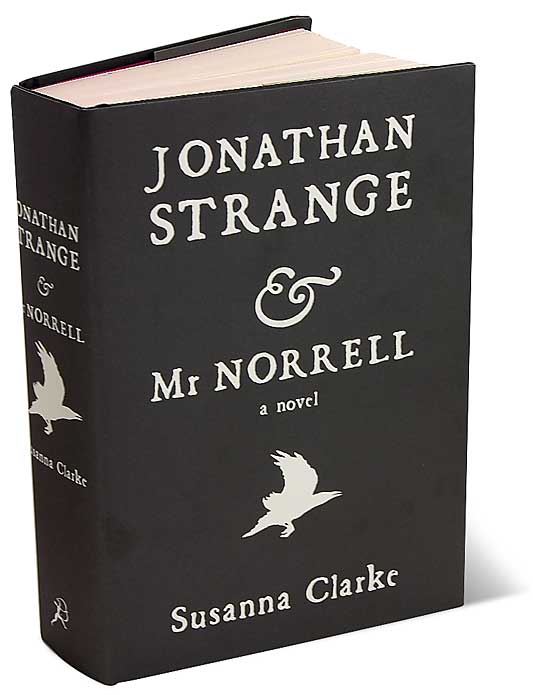 Jonathan Strange and Mr Norrell (Susanna Clarke) – a wonderful
combination of the politics, literature and society of the early 19th
century, Austenesque writing, and magic. It’s really long, but utterly
enthralling. The at times very long footnotes add richness and humour to the
story, and the novel is set in a rich imaginative world which is incredibly
convincing. The first time I ‘read’ it was age 17 as an audio book – very long
but very worth it as the skill of the writing becomes so evident when read
slowly. The Ladies of Grace Adieu, the book of short stories, is also
lovely, and I hope Clarke writes more soon!
Jonathan Strange and Mr Norrell (Susanna Clarke) – a wonderful
combination of the politics, literature and society of the early 19th
century, Austenesque writing, and magic. It’s really long, but utterly
enthralling. The at times very long footnotes add richness and humour to the
story, and the novel is set in a rich imaginative world which is incredibly
convincing. The first time I ‘read’ it was age 17 as an audio book – very long
but very worth it as the skill of the writing becomes so evident when read
slowly. The Ladies of Grace Adieu, the book of short stories, is also
lovely, and I hope Clarke writes more soon!


