In my family, I am considered something of an oddity in that
I can – and will – read and re-read my favourite books. It’s something my
Grandma never understood about my Granddad – “You know the ending! It’s just
not as interesting the second time!” – but I believe that the proof of an
excellent book is in the re-reading. If it is truly well-written with a
gripping plot and believable characters, re-reading will bring to light new
facets of each of these things. Otherwise, I will get bored and stop
re-reading.
Some books I have re-read just once (occasionally this has
been due to studying them at university!), and others I re-read on a two year
to yearly basis. Some of them, I have been reading since childhood, and others
are more recent. Here is a selection of books I have lost count of the amount
of times I have read, and why. Give them a try J
The Chronicles of Narnia (C.S. Lewis) – childhood classics.
My favourite used to be The Voyage of the Dawn Treader and I remember
disliking The Horse and His Boy, but this is now actually one of my
favourites. A few years ago I decided to read the series based on chronological
publication date rather than the order they are usually presented in (beginning
with The Magician’s Nephew – which was actually last but one to be
published), and I think I prefer it this way. The current order was suggested
by a young fan in a letter to Lewis and was adopted after he agreed it would make
sense. Every time I read these books I discover something new!
Little Women (Louisa May Alcott) – my Mum used to
joke I could go on Mastermind answering questions about this book. I read it,
and its three sequels, many many times as a child. Like every young girl
reading this book, I wanted to be Jo March. I’m sure it comes across as very
moralistic to anyone reading it for the first time as an adult, but I love it.
It’s just the story of four sisters learning their place in the world and how
to love each other and those around them really well – and it has some funny
moments, too. BBC Radio 4 recently re-ran their dramatic version and I really
enjoyed it. The 1994 film is also beautiful.
Wuthering Heights (Emily Brontë) – read for the first
time aged 11, this was the first book I really had to work at understanding. I
knew part of the story from the musical Heathcliff (it was a musical
starring Cliff Richard in the title role; my mum was a huge fan so we watched the video many times!) but realised that half of the story in that was missing.
I wrote my A level comparative paper on it (comparing the treatment of romance
in a social context to that in Elizabeth Gaskell’s North and South) and
learned pages of quotes from it for a final year exam on Victorian Literature
during my degree. It’s a fascinating book, and each time I read it I realise
that more and more; it’s just so unusual for its time (and for any time), and
the characters are so individual – I can’t think of equivalents to Cathy
Earnshaw and Heathcliff in any other books I know. I still cannot understand,
however, how ANYONE having actually read the book, could find Heathcliff
attractive.
I Capture the Castle (Dodie Smith) – as I write, I am
watching the film adaptation of this. Although some details of the novel are
amended, I think the spirit of the book is quite well communicated – and I love
Bill Nighy as Mortmain (though physically he doesn’t correlate to the
description in the book). This is the classic coming of age novel, and what I
love is Cassandra’s narrative, the beautiful characterisation of the eccentric
family, and the literary references. I also find it funnier and funnier each
time I read it, and every time I don’t want it to end because it is so
delightfully written. Having read some of Smith’s other novels in the past
year, this is still the best in terms of storyline, characterisation and pace.
It’s also incredibly bittersweet, and has probably my favourite opening line of
all time (‘I write this sitting in the kitchen sink’).
These is My Words (Nancy Turner) – at the last
meeting of school’s book club, we discussed this as I had recommended it
before. All of the ladies who read it absolutely loved it, and every person I
have lent it to has also loved it. I still maintain it would be a fantastic
film, particularly with Hugh Jackman playing Jack, the main male character!
Another diary form novel, it draws you into Sarah’s world, a young woman from a
pioneering family finding her way in the world. She and Jack are wonderful
characters, and this book succeeds in making me both laugh and cry every single
time I read it. Again, bittersweet, but so satisfying. There are sequels. One
day perhaps I’ll read them...
The Lost Art of Keeping Secrets (Eva Rice) – This is
a funny one. It’s just a retro chick-lit type novel but it’s so light, fluffy,
innocent and fun that I read it for pure escapism. It contains: a mouldering
stately home, a poverty-stricken noble family who live in it, three teenagers
living up in the late 50s, an eccentric older lady, and lots of improbable
happens. It’s delightful.
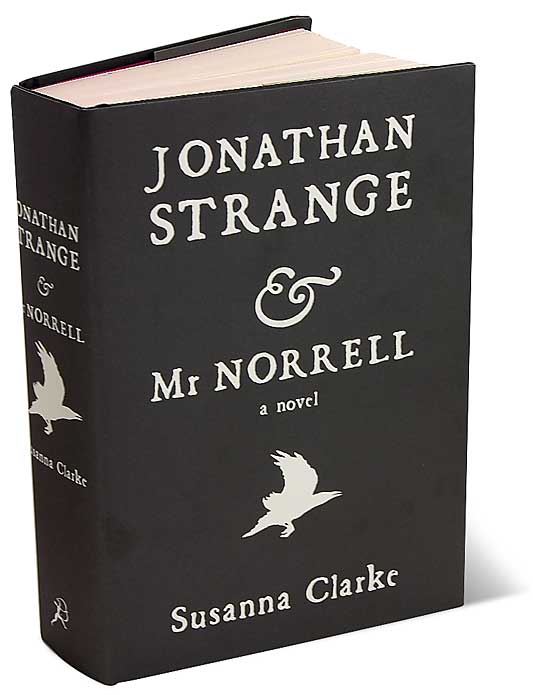
Jonathan Strange and Mr Norrell (Susanna Clarke) – a wonderful
combination of the politics, literature and society of the early 19th
century, Austenesque writing, and magic. It’s really long, but utterly
enthralling. The at times very long footnotes add richness and humour to the
story, and the novel is set in a rich imaginative world which is incredibly
convincing. The first time I ‘read’ it was age 17 as an audio book – very long
but very worth it as the skill of the writing becomes so evident when read
slowly. The Ladies of Grace Adieu, the book of short stories, is also
lovely, and I hope Clarke writes more soon!
Back from university some time in 2009, my dad told me about a programme he had recorded from the television called ‘The Narnia Code’ (BBC, April 2009), where an academic had come up with a theory explaining the coherence of C.S. Lewis’s Narnia series. We watched it together and I thought the premise intriguing. Michael Ward, a Lewis scholar, was reading Lewis’s poem ‘The Planets’ as part of his research when he was struck by the line in reference to Jupiter: ‘winter passed/And guilt forgiven’. He realised this was the premise of the story of The Lion, the Witch and the Wardrobe and began linking the rest of the books in the series to planets in the pre-Copernican constellation: Jupiter, Mars, Sol, Luna, Mercury, Venus and Saturn.
I was interested by this theory and emailed a Lewis specialist friend from my time in Lille, France, who sent me a review she had done of his book Planet Narnia (2008). The main argument against it was, she said, that even academics who are familiar with the medieval view of the planets had difficulty connecting them to the books in the way that Ward does.
Summer 2009. I am at Greenbelt festival (see this post) and notice that Michael Ward is going to do a talk about Planet Narnia. Interested, I decide to go along. Unfortunately in 50-odd minutes there’s not much he can say that I haven’t already heard in the BBC documentary, although he does go into a little more ‘academic’ detail than would presumably have been appropriate for television. The bookshop stock the book but at its hardback price I decide against it.
A few weeks ago I was in Sheffield city centre library in the literature section and wondered whether I would stumble across Planet Narnia; it had been in the back of my mind to read for a few months. There it was, and five minutes later I was reading it on the train home for a day. I spent most of that weekend reading when I could, and some evenings while doing a placement in a Sheffield secondary school. It definitely makes interesting reading, if you are at all familiar with Lewis. For me the main problem was the frequent references made to Lewis’s ‘Ransom’ trilogy (another for the ‘to read’ list), but I could follow the main point of what is being said. It did feel as though more time was given to this series than to the Narnia books themselves at times. Ward’s thesis goes further than just linking the books to planets, however; he is trying to prove that Lewis was attempting to make his readers Enjoy the planets rather than Contemplating them. (The difference between Enjoy and Contemplate is the difference between the French connaître and savoir – the first is knowledge gained by experiencing it rather than observing and knowing in the mind) He calls this ‘donegality’; the process of understanding the characters of the planets through reading books which are written in the ‘spirit’ of that planet. I’ve explained that badly.
In conclusion, if you are a Narnia enthusiast and have a bit of concentration (although it’s not written in the highest scholarly style there are some presumptions made about the level of academic knowledge of the reader) it’s well worth a read. Then it’s up to you as to whether you are convinced by Ward’s thesis; personally I’m still on the fence.
Between the ages of about 13 and 15 I was unhappy. Before then I enjoyed primary school or was managing OK with the senior school transition. After that I was busy working on my GCSEs before escaping to sixth form. The reason I was unhappy wasn’t anything particular, it’s just I was a teenager. I was also not very popular, difficult to get along with and acted like I was superior to everyone else. In any case, books were my escape. I think it was in this period that I would read almost one book per day. I remember coming home feeling miserable and lying on my bed with yet another book, escaping.
Books help us deal with reality. Or at least, they seem to give us the impression that there is shape to our lives, that one day we will get to the end of whatever thing is troubling us and move on, in the same way that we know the hero or heroine will win through in the end. I suppose when I was reading fantasy novels I was, in my imagination, also adventuring in ways I never would in real life. My own quest was to finish my five years in secondary school intact.
I’m fairly sure that if I were to read back over some of those novels – mostly a mixture of fantasy novels and novels about children in various wars and conflicts – they would evoke that part of my life. It’s this layering of reality and fiction that I’m finding while reading Reading Lolita in Tehran (Aza Nafisi, 2003). I must have picked it up a few years ago but never got round to reading it until a friend told me how much she’d enjoyed it. I’m about three quarters of the way through and am indeed finding it very interesting, although it’s difficult to know how much of it is fact and how much (especially conversation) is fabrication. It’s about the author’s career teaching English Literature at various universities (and a book group) in Tehran, Iran, during the 1980s and 1990s and is stimulating and heartbreaking at the same time. It did remind me, oddly, of Lloyd Jones’ Mister Pip (2006). This is the story of a young girl, Matilda, who lives on a tropical island where the only white man becomes the teacher and uses Dickens’ Great Expectations as his main teaching aid. Considering Mister Pip was so highly acclaimed (and was nominated for the 2007 Man Booker prize) I was underwhelmed, but I have a feeling that if I had more affection for Great Expectations (my least favourite Dickens) I might have enjoyed it more.
My overall impression is that in Reading Lolita in Tehran it seems that the novels and writers under discussion are being read into the Iranian society of the 1980s and 1990s, whereas with Mister Pip the emphasis seems to be to be on the utter foreignness of the text. It’s completely out of place on the island, and wondering about this other world – Pip’s world in unknown England – is what helps Matilda to escape what is happening in reality. For Azar Nafisi and her students, every novel becomes a starting point for political debate and to illustrate what is happening in Iranian society. Lolita, a young girl whose life and textual voice has been taken away from her, seems to embody the position of Iranian women, with so many rights and freedoms taken away from them. Yet literature is for these women an immense escape. Nafisi describes how, racked with insomnia during night attacks at the time of the Iraqi-Iranian war, she would read. Yet she describes herself as being capable of greater concentration than usual under these straitened circumstances.
Right at the beginning of Reading Lolita Nafisi tells us she warned her students: ‘...do not, under any circumstances, belittle a work of fiction by trying to turn it into a carbon copy of real life; what we search for in fiction is not so much reality but the epiphany of truth.’ Yet she admits that “It is of Lolita that I want to write, but right now there is no way I can write about that novel without also writing about Tehran. This, then, is the story of Lolita in Tehran, how Lolita gave a different color to Tehran and how Tehran helped redefine Nabokov’s novel, turning it into this Lolita, our Lolita.”
Perhaps C.S.Lewis was right to say that ‘Literature adds to reality, it does not simply describe it’ after all. Because in the end what we bring to our reading of any text – our beliefs, prejudices, experiences – shapes how we view it and how we remember it, as well as how we experience life itself.
On a lighter note... Literary highlights on stage and screen recently for me have been:
BBC’s new adaptation of Emma. Light and delightful, although everyone is far too beautiful! (Oddly enough I quite enjoy adaptations of Emma although I heartily dislike the book itself and only got through the whole thing with much will-power and at least three false starts)
RSC’s production of Hamlet as shown on Boxing Day in the UK. David Tennant impressed me greatly, particularly by the fact that he genuinely made me laugh. There was something particularly memorable about the grave scenes (the digging of Ophelia’s grave and her burial) for me, although I’m not enough of a Hamlet buff to know why. Of course, when you sit through three hours of something like that, it does make it slightly (and accidentally) amusing to see the majority of the cast die in the last 5 minutes!
A stage production of Flat Stanley (original book by Jeff Brown, 1964) which I went to see this very afternoon with my mum and two of my young cousins. Anyone else remember the story about the boy whose notice board fell on him in the night and made him flat? It was excellently staged and lots of fun, although the fake American accents were a little grating.
"Books are humanity in print" (Barbara W. Tuchman)
"But, indeed, we prefer books to pounds; and we love manuscripts better than florins; and we prefer small pamphlets to war horses" (Isaac D'Israeli)
"People create stories create people; or rather stories create people create stories." (Chinua Achebe)
"A classic is a book that has never finished saying what it has to say." (Italo Calvino)
"Literature is news that stays news" (Ezra Pound)
"A poet is someone who is astonished by everything" (Anonymous)
“Literature is where I go to explore the highest and lowest places in human society and in the human spirit, where I hope to find not absolute truth but the truth of the tale, of the imagination and of the heart.” (Salman Rushdie)
"Je sais que la littérature ne nourrit pas son homme. Par bonheur, je n’ai pas très faim." (Jules Renard)